
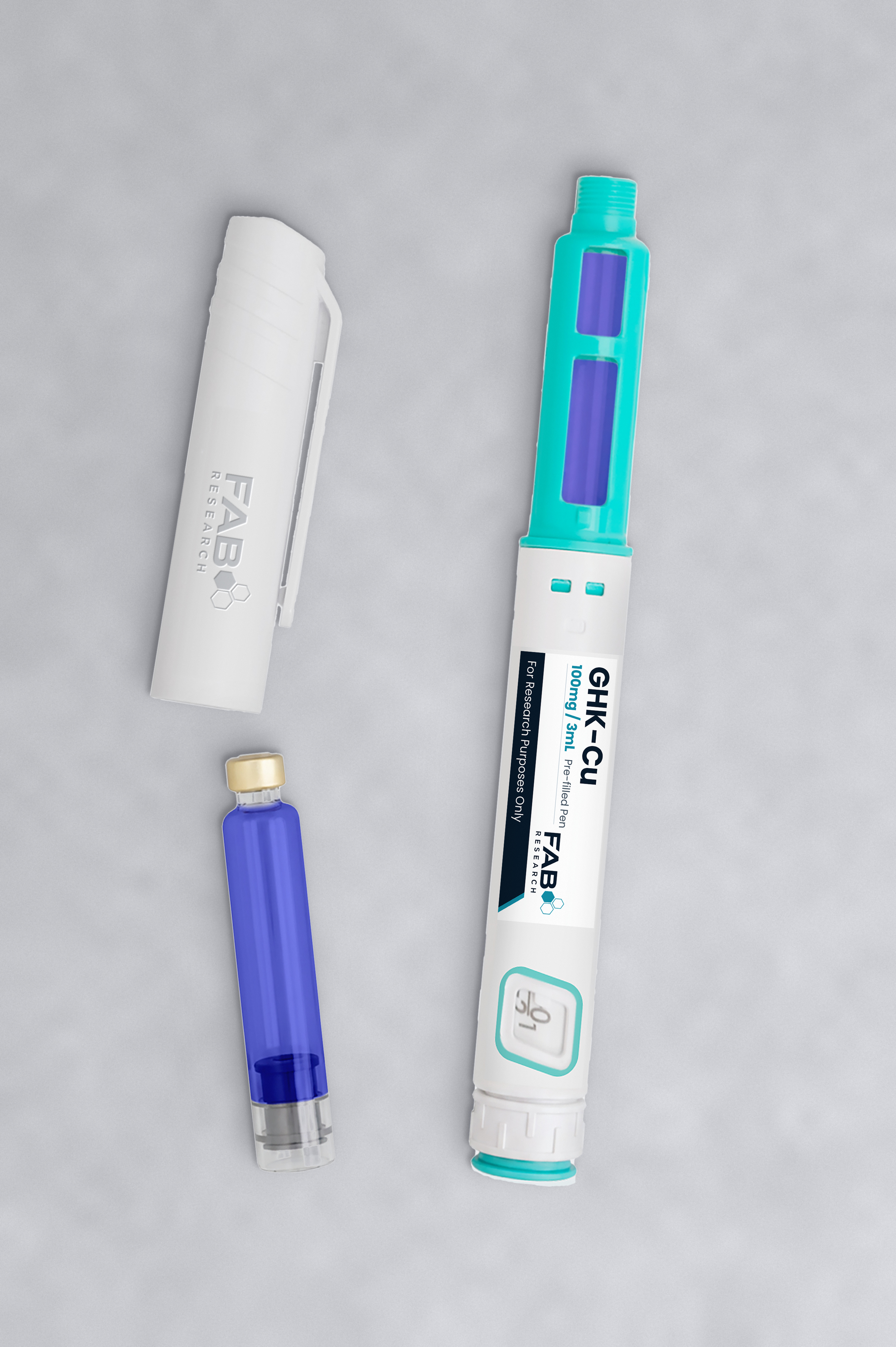
- Analysis
- HPLC / LC-MS
- Delivery
- Cold-chain
- Traceability
- COA per batch
Semax
30 mg / pen
ACTH (4–10) analogue heptapeptide — research pen
- Batch reference
- FR-SMX-2506
- Retest date
- June 2028
1 box · 30 mg per pen
$89
Packs
Ships in 24hDiscreet packaging
Semax is a synthetic heptapeptide analogue of the ACTH(4–7) fragment with a C-terminal Pro-Gly-Pro extension that confers stability. It is used in neuronal cell models to study BDNF/TrkB expression, neurotrophic signalling and responses to oxidative and hypoxic stress.
Sequence MEHFPGP
Semax comprises the ACTH(4-7) fragment sequence Met-Glu-His-Phe with a C-terminal Pro-Gly-Pro extension that improves enzymatic stability relative to the parent fragment. Research describes several parallel experimental mechanisms. Effects on BDNF protein levels and TrkB receptor activation in rodent hippocampal models are the most consistently replicated mechanistic finding across published studies. Changes in NGF-associated gene expression have been reported in neural tissue and cell models. Modulation of dopaminergic and serotonergic gene expression has been documented in experimental investigations. Influence on genes involved in inflammatory and neurotrophic responses to ischaemia has been characterised in preclinical ischaemia models. A published binding study identified calcium-dependent, reversible binding in rat basal forebrain membrane preparations alongside BDNF changes. Unlike parent ACTH, Semax does not exhibit established steroidogenic activity — separation from adrenal corticotropic effects is consistently reported across studies.
A substantial literature including clinical research conducted largely within Russian institutions and a growing body of independent mechanistic work, though international replication remains limited compared with Western-origin compounds. BDNF and neurotrophic research: replicated findings on BDNF expression in hippocampal and cortical models; TrkB activation documented. Ischaemia models: preclinical investigations of transcriptional responses and neuroprotective endpoints in experimental cerebral ischaemia, including gene-expression profiling. Stroke clinical research: Russian clinical trial programmes examining Semax in ischaemic stroke populations, reporting on neurological and functional endpoints. Cognitive endpoints: animal and limited human research on attention, memory and learning measures. Hormonal separation: studies confirming absence of the corticotropic activity of parent ACTH across models. Research note: the bulk of clinical evidence originates from Russian regulatory programmes and has not been widely replicated in independently conducted international trials.
- 3 mg per application (one metered dose)
- 10 doses per pen (30 mg total)
- Heptapeptide ACTH(4-7) analogue with Pro-Gly-Pro stabilisation (sequence: MEHFPGP)
- Pre-filled sterile solution — no reconstitution step required
Storage: Store refrigerated at 2–8 °C in the original sealed box. Do not freeze. Protect from light.
- For in-vitro laboratory and preclinical research only — not for human or animal administration
- Evidence base primarily from Russian clinical and academic research — limited independent peer-reviewed replication outside that programme
- BDNF / TrkB pathway studies are the most independently replicated research application; hypoxia and oxidative stress models are the secondary application area
- Note: standard Russian research route is intranasal; pen format delivers sterile solution via metered dose — route-specific pharmacokinetics may differ from published intranasal studies
- Russian clinical data: headache reported in some subjects
- Mild nausea possible with intranasal administration (the standard published route)
- No significant adverse events documented in Russian clinical programme publications at studied doses
- Limited independent peer-reviewed safety data — adverse effect profile not comprehensively established outside Russian clinical research
Effects listed are observations from published research literature and are not predictions for any specific use. All FAB Research products are for in-vitro laboratory research — not for human or animal administration.
In-vitro research applications
- BDNF / TrkB expression
- Neurotrophic signalling
- Hypoxia & oxidative-stress models
- Melanocortin receptor studies
Research applications are provided for informational context only and do not constitute a recommendation for any use.
Customer reviews
No reviews for Semax 30 mg yet. Have you received it? Share your experience with other researchers.
Reviews from customers who have received Semax 30 mg will appear here.
Same research pathway
Related compounds