
Verified by independent laboratories, published for every lot
We believe research-grade should mean documented. Each FAB Research lot is analyzed by an ISO 17025 accredited third-party laboratory and the full data set is published alongside the product.
RP-HPLC Purity
≥95–99% main-peak area
Reversed-phase HPLC on a C18 stationary phase with an acetonitrile/water gradient (0.1% TFA modifier) and UV detection at 214 nm — the wavelength absorbed by the peptide bond backbone. Purity is expressed as the main-peak area as a percentage of all UV-absorbing species in the chromatogram.
Detects / confirms
- Truncated and deletion sequences from missed couplings
- Oxidised variants (e.g., Met-sulfoxide, Trp-oxidation)
- Diastereomers and racemised residues
- Early-eluting synthesis by-products
Note — Area % ≠ mass %. HPLC purity is a relative peak-area figure and cannot account for water, salt or TFA counter-ions. Actual peptide mass is determined separately by NPC.
LC-MS Identity
±0.02% molecular weight match
Electrospray ionisation mass spectrometry (ESI-MS) generates multiply-charged ions in positive mode. Deconvolution yields an average molecular weight compared with the theoretical value calculated from the amino acid sequence. The LC separation step additionally resolves co-eluting peptide-related impurities invisible to UV-only methods.
Detects / confirms
- Wrong-compound contamination and sequence substitution errors
- Miscoupled or scrambled residues
- Truncated or extended chains co-eluting under HPLC
- Correct molecular formula confirmation
Note — Identity confirmation by mass spectrometry is the only method that can distinguish a correctly sequenced peptide from an isomeric wrong-sequence compound.
Net Peptide Content
Reported as % of stated weight
Research-grade peptides routinely contain TFA counter-ions (from HPLC purification), residual water (peptides are hygroscopic) and trace solvents — none of which are detected by UV-HPLC. Net peptide content (NPC) is determined by amino acid analysis (AAA) after 6N HCl hydrolysis at 110 °C for 24 h, or by UV quantitation using a calculated extinction coefficient.
Detects / confirms
- TFA and acetate counter-ion content
- Residual moisture (Karl Fischer or TGA)
- True mass of peptide chains per vial
- Discrepancy between labelled dose and actual peptide mass
Note — A vial labelled 5 mg may contain 3.5 mg of peptide and 1.5 mg of TFA salt and water. NPC ensures the stated dose reflects actual peptide mass.
Bacterial Endotoxin (LAL)
<0.1 EU/mg release limit
The kinetic chromogenic Limulus Amebocyte Lysate (LAL) assay detects bacterial lipopolysaccharide (LPS) from gram-negative bacteria introduced during synthesis, purification or downstream handling. The kinetic method quantifies endotoxin by measuring the rate of chromophore development, giving a precise EU/mg value rather than a pass/fail result.
Detects / confirms
- Gram-negative bacterial LPS at sub-nanogram levels
- Contamination from synthesis resins and buffers
- Process water or buffer endotoxin carry-over
- Invalid assay signal via spike recovery control
Note — Sub-nanogram endotoxin concentrations activate TLR4 on immune and endothelial cells, triggering NF-κB signalling that invalidates cytokine and proliferation assays — making this test critical for in-vitro research integrity, not only safety.
Residual Solvents
Below permitted daily exposure limits
Solid-phase peptide synthesis uses multiple organic solvents: TFA (Fmoc deprotection), acetonitrile and DMF (coupling and washing), DCM (resin swelling) and NMP. GC headspace analysis quantifies residues against ICH Q3C limits: Class 1 solvents (carcinogens — avoid entirely), Class 2 (limit strictly), Class 3 (low risk). TFA residue as counter-ion is assessed separately via NPC.
Detects / confirms
- TFA, acetonitrile and DMF from Fmoc-SPPS
- DCM, NMP and isopropanol from wash steps
- Class 1 solvent absence (benzene, carbon tetrachloride)
- ICH Q3C Class 2 limits for acetonitrile (≤410 ppm) and DMF (≤880 ppm)
Note — Residual solvents are reported on the Certificate of Analysis with measured concentrations and the applicable ICH Q3C permitted daily exposure limit for each analyte.
Sterility & Appearance
No growth in 14-day incubation
Solution products undergo sterility testing by membrane filtration per USP ⟨71⟩, with 14-day incubation in fluid thioglycollate and soybean casein digest media. All products are visually inspected per USP ⟨790⟩: clarity, colour and absence of visible particulates for solutions; cake colour, uniformity and reconstitution behaviour for lyophilized material. Sub-visible particulate matter is assessed by light obscuration per USP ⟨788⟩.
Detects / confirms
- Viable microbial and fungal contamination
- Visible particulates and foreign matter
- Colour changes indicating degradation
- Cake integrity and reconstitution anomalies in lyophilized lots
Note — Appearance data, sterility result and particulate matter count are recorded on the Certificate of Analysis as independent quality attributes alongside analytical purity and identity results.
Packaging & labelling
Every unit labelled for research use
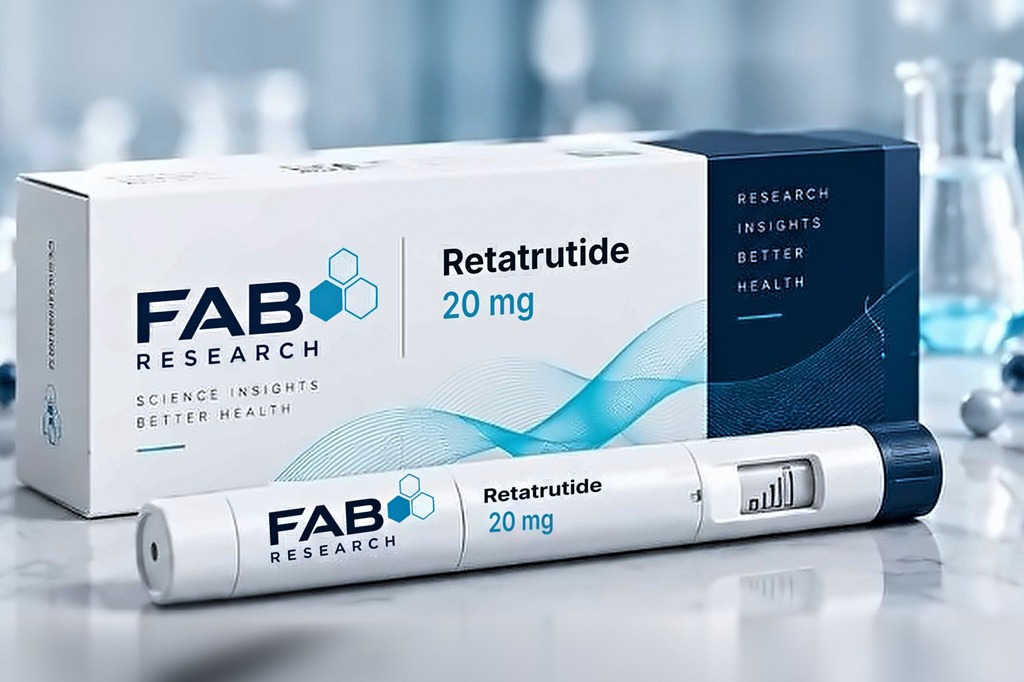
Product labels carry the compound name, dose, lot number, storage instructions and the mandatory "For research use only — not for human consumption" statement. Tamper-evident seals on every box.
- Lot number matches published COA
- Storage conditions printed on-pack
- Research-use statement on box and vial
Lot release log
Recent releases
Representative recent lots. Full COA documents are linked from each product page.
| Compound | Lot | HPLC purity | LC-MS | Endotoxin | Released | |
|---|---|---|---|---|---|---|
| Retatrutide 20 mg | FR-RT20-2506 | ≥99.2% | Conforms | <0.1 EU/mg | June 2026 | |
| Retatrutide 40 mg | FR-RT40-2506 | ≥99.2% | Conforms | <0.1 EU/mg | June 2026 | |
| Tirzepatide 20 mg | FR-TZ20-2505 | ≥99.0% | Conforms | <0.1 EU/mg | May 2026 | |
| Tirzepatide 40 mg | FR-TZ40-2505 | ≥99.0% | Conforms | <0.1 EU/mg | May 2026 | |
| BPC-157 + TB-500 40 mg | FR-BT40-2506 | ≥99.0% | Conforms | <0.1 EU/mg | June 2026 | |
| NAD⁺ 1000 mg | FR-NAD-2507 | ≥99.5% | Conforms | <0.1 EU/mg | July 2026 | |
| Glow 70 mg | FR-GLW-2506 | ≥99.0% | Conforms | <0.1 EU/mg | June 2026 | |
| Semaglutide 10 mg | FR-SM10-2506 | ≥99.0% | Conforms | <0.1 EU/mg | June 2026 | |
| Cagrilintide 10 mg | FR-CG10-2507 | ≥99.0% | Conforms | <0.1 EU/mg | July 2026 | |
| AOD-9604 10 mg | FR-AOD-2505 | ≥99.0% | Conforms | <0.1 EU/mg | May 2026 | |
| BPC-157 20 mg | FR-BPC-2506 | ≥99.0% | Conforms | <0.1 EU/mg | June 2026 | |
| TB-500 20 mg | FR-TB5-2506 | ≥99.0% | Conforms | <0.1 EU/mg | June 2026 | |
| GHK-Cu 100 mg | FR-GHK-2506 | ≥99.0% | Conforms | <0.1 EU/mg | June 2026 | |
| CJC-1295 + Ipamorelin 20 mg | FR-CJI-2506 | ≥99.0% | Conforms | <0.1 EU/mg | June 2026 | |
| Tesamorelin 20 mg | FR-TES-2505 | ≥99.0% | Conforms | <0.1 EU/mg | May 2026 | |
| MOTS-c 40 mg | FR-MOT-2507 | ≥99.0% | Conforms | <0.1 EU/mg | July 2026 | |
| Epithalon 50 mg | FR-EPI-2506 | ≥99.5% | Conforms | <0.1 EU/mg | June 2026 | |
| Semax 30 mg | FR-SMX-2506 | ≥99.0% | Conforms | <0.1 EU/mg | June 2026 | |
| Selank 30 mg | FR-SLK-2506 | ≥99.0% | Conforms | <0.1 EU/mg | June 2026 | |
| IGF-1 LR3 1 mg | FR-IGF-2507 | ≥98.0% | Conforms | <0.1 EU/mg | July 2026 | |
| Humanin 10 mg | FR-HUN-2507 | ≥98.0% | Conforms | <0.1 EU/mg | July 2026 | |
| LL-37 5 mg | FR-LL37-2507 | ≥97.0% | Conforms | <0.1 EU/mg | July 2026 | |
| 5-Amino-1MQ 100 mg | FR-5MQ-2507 | ≥98.0% | Conforms | <0.1 EU/mg | July 2026 | |
| GHRP-2 10 mg | FR-GH2-2507 | ≥99.0% | Conforms | <0.1 EU/mg | July 2026 | |
| GHRP-6 10 mg | FR-GH6-2507 | ≥99.0% | Conforms | <0.1 EU/mg | July 2026 | |
| Sermorelin 10 mg | FR-SRM-2507 | ≥98.0% | Conforms | <0.1 EU/mg | July 2026 | |
| Ipamorelin 10 mg | FR-IPA-2507 | ≥99.0% | Conforms | <0.1 EU/mg | July 2026 | |
| CJC-1295 (No DAC) 10 mg | FR-CJC-2507 | ≥98.0% | Conforms | <0.1 EU/mg | July 2026 | |
| Sermorelin + GHRP-6 10 mg | FR-SG6-2507 | ≥98.0% | Conforms | <0.1 EU/mg | July 2026 |
All compounds are supplied for in-vitro laboratory research by qualified professionals, with a Certificate of Analysis for every lot. Research Use Policy